
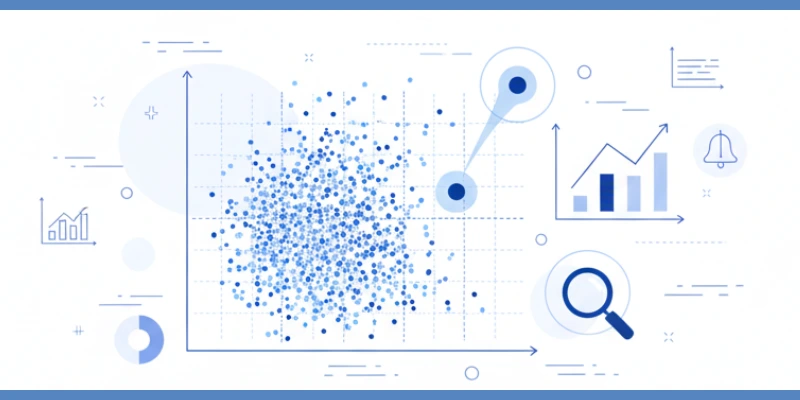
Outliers are data points that stand out considerably from the remainder of a dataset. These unusual values can appear due to measurement errors, data entry mistakes, or genuine rare events. Identifying them is an essential step in data preprocessing because they can strongly influence statistical analysis and machine learning models. A single extreme value can distort averages, increase variance, and reduce model accuracy.
Understanding how to detect and manage outliers helps build reliable and trustworthy models. It also improves decision-making based on data insights. If you want to gain practical skills in identifying and treating anomalies in real datasets, consider enrolling in the Data Science Course in Trivandrum at FITA Academy to strengthen your analytical foundation and advance your career confidently.
What Are Outliers and Why They Matter
Outliers are observations that lie far away from other data points. They may represent errors, or they may highlight important, rare patterns. Not all outliers are bad. Some reveal valuable insights, such as fraudulent transactions or unusual customer behavior.
However, ignoring extreme values can negatively affect your results. In regression models, outliers can shift the best-fit line and reduce predictive performance. In clustering, they can distort group formation. For this reason, data scientists must carefully examine unusual observations before making decisions.
Methods to Detect Outliers
There are several effective techniques to identify outliers in datasets. One common method involves using summary statistics such as mean and standard deviation. Values that fall far from the average can be flagged for further inspection.
Another widely used approach is the interquartile range method. This technique focuses on the spread of the middle fifty percent of the data. Points that lie beyond a defined range are considered potential outliers. Visualization tools such as box plots and scatter plots also help in spotting extreme values quickly and clearly.
In more advanced scenarios, machine learning based anomaly detection methods can be applied. These methods are useful when working with high-dimensional or complex datasets. If you want hands-on experience with these statistical and machine learning techniques, you can take the next step by signing up for a Data Science Course in Kochi to deepen your practical understanding and apply these skills confidently.
Strategies to Handle Outliers
Once outliers are detected, the next step is deciding how to handle them. The correct approach depends on the context of the problem and the nature of the data.
If the outlier is caused by a data entry or measurement error, removing it may be the best solution. Cleaning inaccurate values improves the overall quality of the dataset.
If the extreme value represents a genuine observation, removing it may not be appropriate. In such cases, transforming the data using scaling or logarithmic adjustments can reduce the impact of extreme values. Another strategy is capping, where extreme values are replaced with a defined threshold.
In some business cases, it is better to keep outliers because they provide critical insights. For example, unusual spending patterns may indicate fraud detection opportunities. The key is to evaluate outliers thoughtfully rather than removing them automatically.
Best Practices for Managing Outliers
Always begin with exploratory data analysis before making decisions. Visualizing the data helps you understand whether an outlier is meaningful or problematic.
Document every decision you make regarding outliers. Transparency ensures reproducibility and builds trust in your analysis.
Finally, test your model performance with and without outliers. Comparing results helps determine whether removing extreme values improves accuracy or reduces bias.
Detecting and handling outliers is a fundamental skill in Data Science. Extreme values can either damage your analysis or reveal powerful insights. The key lies in understanding the context, applying the right detection methods, and choosing suitable treatment strategies.
By mastering these concepts, you can build more accurate models and deliver reliable business insights. If you are ready to develop strong expertise in data preprocessing and advanced analytics, consider taking a Data Science Course in Jaipur to sharpen your skills and grow in the field with confidence.
Also check: Hypothesis Testing Without Mathematical Overload